Saturday, January 27, 2007


Walt Mink - Little Sister
1996

Any band lucky enough to get a rating of 10 on Pitchfork today would probably be pretty happy. Maybe they'd even assume that such a strong endorsement would assure them a career. Certainly the Arcade Fire acts as if this is so, and they didn't even get a perfect score. But Walt Mink, a power trio from St. Paul, Minnesota, flamed out just as their critical star was rising.

Walt Mink began life at Macalester college in the early '90s and achieved a moderate level of fame. They scored a deal with Caroline for their debut album and sales were not horrible. However, the band's sound--Smashing Pumpkins as sung by the Chipmunks--was an odd one, and surely no one predicted these guys would become much more than cult faves. If not for their brilliant swan song El Producto it is doubtful that Walt Mink would even qualify as "cult."

On their final album, Walt Mink exorcized the naive posturing found on their first two records and found an original voice amid the rubble of punk, prog, and folk. An odd mix, sure, but the band delivered a bonified masterpiece just before they imploded and "Little Sister" is but one of this album's amazing tracks.

Monday, January 01, 2007


Dallas - Let's Split
1999

Before blogs, bands still got hyped to death. Estonian band Dallas (big JR Ewing fans, I presume) racked up critical raves throughout 1999, including a spot in the Toronto Star's top ten albums of the year. But the band sat on their hands until 2003 and by then everyone was tired of Stereolab ripoff bands. Well, Dallas wasn't really a Stereolab ripoff, but they certainly drew from the same panoply of influences: jazz, lounge, pop, krautrock, etc. Still, their self-titled third album is a cutout bin surprise, with plenty of good songs and period touches like fuzz guitars, tambourines and canned strings.

Dallas formed in 1992, one year after Estonia gained independence from the Soviet Union. They released a few singles, an EP, and two albums before signing to American label High Park records to release the much lauded Dallas. The primary songwriters were keyboardist/vocalist Holger Loodus and guitarist Tauno Pääslane, but others were involved, especially vocalist Kristi Kindel who can be heard on "Let's Split" and pretty much every other song on the album.

Click here to buy the album from CD Baby.

PS: This is NOT the band's website.

Sunday, December 17, 2006


Smack Dab - Right Smack Dab
1994

No, this isn't a novelty song. All of Smack Dab's songs sound like this. Short, catchy, and a little bit silly. Ahh, but I love it! Smack Dab's charm can surely be pinned on the inimitable voice of the eternally childlike Linda Hagood, who sounds like a primitive, purer version of Joanna Newsom. (Guess Hagood should have learned to play the harp.)

Trouser Press has an informative write-up on the trio here, but I have a story of my own. I first heard the band when their second album, Majestic Root, was originally released in 1994 (containing the above song), but forgot about them a few years later. Fast forward to 2001; I'm living in San Francisco and one night I go to a bar in the mission with a friend. I sit down at the bar and the female bartender says--in a squeaky, cute voice-- "What can I get for you?" I nearly fell off the stool. "You used to be in Smack Dab, didn't you?!" I asked. Strangely, she didn't even seem that surprised. She was more surprised that I didn't recognize her from the Double U, a San Francisco based-band she was in at the time.

The above photo is a recent image of Hagood. I couldn't find any cool vintage photos. See, Google Images doesn't have everything.

Monday, December 11, 2006

 
Palm Fabric Orchestra: The Garden (1994)

In 1988, Poi Dog Pondering quickly built a reputation as a lovable troupe of scruffy kids from Texas who often had trouble fitting on the stage, literally and figuratively. Orbiting around lead singer Frank Orral was a constellation of eight or ten folk journeymen and musical stragglers who played exotic instruments like the ukelele and accordion (what, you thought Beirut invented that?). And with their debut single and college radio hit "Living with the Dreamy Body," Poi Dog had the perfect song to launch a legend. Introduced with a tin whistle and Scottish drum rolls, "Dreamy Body" sounded like nothing else on college radio, and yet, with its nasal vocals and silly lyrics, was not so far removed from other alternative bands of the time. And then everything went to shit. The band signed to Columbia and released a really embarrassing album of crunchy granola folk that was too bland even for the '89 Earth Day festival. After that, Poi Dog went electric and tried rap and Smiths soundalikes. With one chord from Kurt Cobain, Poi Dog was rendered both obsolete and uncool. In 1992, Orral dissolved the band temporarily to record a new, one-off album under the name of Palm Fabric Orchestra. Thankfully, Orral didn't attempt to stay current by going grunge. Instead, he retreated into that strange boomer netherworld, New Age, and believe it or not, the album he recorded (with a bunch of other Poi Doggers) is actually a classic of the genre. Released on Carrot Top in 1994, Palm Fabric Orchestra's sole album Vague Gropings in the Slip Stream has held up better than anything in the Poi Dog catalog (except that first EP). Of course, it is New Age, so an open mind is most definitely required. After releasing the Palm Fabric Orchestra album, Orral kicked Poi Dog Pondering back into gear and continued to release albums. They are still recording and playing as of 2006.

Thursday, November 16, 2006


Chapterhouse - Pearl

Almost anyone who loved music and grew up in Jacksonville went to Einsteins at some point. It was an underage club so they didn't serve alcohol. Kids went there mainly to dance and to be seen on the scene. The uniform for girls was jeans or skirt, doc martens, and a white or blank tank top. People who visited from out of town were always mystified by the fact that people all faced in the same direction while they danced. People also tended to dance right in front of the speaker and air-guitar...a lot.

Anyway, this pic is from Einstein's early days, before the monodirectional craze kicked in. But I swear it's true! I was there pretty much every Saturday night.

One of my all-time favorites from the Einsteins playlist was Chapterhouse's "Pearl." It wasn't obscure at the time, but I bet most people under 22 have never heard the song. Download it now and imagine yourself dancing in front of the speaker, air-guitaring the night away, and it's like you're there.

Monday, November 13, 2006


Folky Goodness

Raven Sings the Blues is a nice little blog that profiles new and old music. In August, the site posted some mp3's from two amazing femme folkies, Linda Perhacs and the newly discovered Sibylle Baier. Click here to download some truly beautiful (and slightly weird) tracks.

Also, the brilliant Waxidermy blog posted on Mossy Davidson a while back. Mossy, who recorded this album in Alaska, is actually related to Jewel! She put out one double album of lonely folk tunes sometime in the '70s and it's definitely worth hearing. Click here for an mp3.

Tuesday, October 03, 2006


Azitis - Who's to Blame
1970

Released in 1970, the sole album by Azitis (pronounced "as it is") is regarded by some folks (mostly the band themselves) as the first Christian rock album. Certainly, the themes are apparent enough from the overtly religious album cover and song titles like "Judgment Day," but this claim is dubious. Most Christian rockers consider the first Christian rock album to be Larry Norman's Upon This Rock. Nevertheless, Azitis' record is certainly the first overtly Christian psych album, if that counts for anything.

The band started out as a fourpiece in Sacramento, calling themselves the very unchristian sounding Cambridge Coroners. The key members were Don Lower and Steve Nelson; other members came and went.

Somehow the band got signed to Capitol and drove down to LA to record Help, an album presumably concerned with more important issues than what John Lennon had on his mind when he wrote a song of that name. According to the band, the cover was a symbol "chosen to represent Christianity, piercing the earth. It was the theme for our earlier work. The invention of christian faith was overshadowing the other philosophies of mankind. Our message was, all religions give us hope and faith in our fellow man. The only solution for a crowded planet."

Draw your own conclusions about the band's philosophy, but the music is indeed an intriguing mix of Floyd-style space rock and LA-styled folk rock.

The band has a website that badly needs updating, but does contain some useful information and plenty of period pics.


In the past year a large number of psych/folk blogs have been appearing. Most of them post entire albums and the quality is generally amazing. I advise everyone to head over to Joy of a Toy, a new blog, and download Mellow Candle's brilliant Swaddling Songs.

Friday, September 29, 2006


Mosquitoes - Special Powers
2001

Sometime around 2001 I started up a record label to release a 7" by my then-favorite local band, Mates of State. After that single quickly sold out,it was apparent that Mates of State had outgrown the confines of little indie labels like mine. So without any artists to promote, I began attending shows in San Francisco looking for cool new bands.

I think I saw the Mosquitoes at the Edinburgh Castle, a Scottish pub in San Francisco that hosted big-screen soccer parties and shambling indie shows. I was drunk and tired when I saw the Mosquitoes, but their show captivated me nonetheless. They reminded me of the Bartlebees and the Television Personalities, indie pop bands with great songs and shoddy instrumentation. I talked to the Mosquitoes singer afterwards and he gave me an untitled, handmade CD with the songtitles written on a little card inside.

Last month I looked up the band and found out some real details. The band is largely the work of Drew Cramer, a San Francisco free-spirit who has worked as a gardener and dessert chef to pay the rent. He is a firm believer in DIY and does almost nothing to promote the band beyond playing the occasional show.

The band is bigger in Australia, where the Lost and Lonesome label has issued an official CD. Check the website here for more info and an interview with Cramer.

Tuesday, September 05, 2006

New post coming soon. In the meantime, there are two new fantastic blogs out there catering to the psych crowd. I highly recommend you check these out:

Acid Dazed
It's Psych

Wednesday, August 30, 2006

 
Bully Pulpit: You Flatter Me (1994)

Bully Pulpit was a truly strange band from LaGrange, IL. Their only CD Beyond Elysium... was released on the interesting '90s label Lotuspool. It was hard for me to find information on the band at first since all the bandmembers used pseudonyms. Luckily, Lotuspool co-founder Chris Garibaldi finally helped me get my facts straight. According to Garibaldi, "the album was recorded in LaGrange and at a barn in Kansas from 1992 to 1994. Most tracks were laid in the loft of a large dairy barn with electricity coming from a single extension chord, which stretched from a Jerry-rigged light socket in the milking facility, just one building away from the barn. The recording was moved to the farm house when the owners of the property discovered the recording and the many highly flammable situations it fostered." Garibaldi's notes also include a cryptic reference to the band's relationship with William S. Burroughs. Apparently, they all used to shoot various weapons together at the barn. Beyond Elysium, a demented amalgam of country, avant-garde rock and psych, got some notices at a few CMJ stations and from John Peel, but failed to generate much interest nationally. The band was clearly influenced by the San Francisco music scene of the '90s, especially the skronky experimentalism of the Thinking Fellers. Unfortunately, Bully Pulpit's songwriting rarely reached the same heights as their innovative impulses, and the album is a patchwork affair that is listenable only in spurts (or with the aid of drugs.) Album opener "You Flatter Me" effectively summarizes the band's interests, and remains an intriguing and original artifact of the era. Bully Pulpit recorded a second album Jockeys in 1995 which was never released, but was available online at one point. I can't find it now. It's supposed to be more cohesive and accessible.

Sunday, August 20, 2006


Great Lakes - Storming
2000

Pitchfork's recent feature about the best songs of the '60s was definitely an impressive achievement. To me, it was a coming-of-age moment for the site. Still, I was a little surprised to see the Beach Boys' "God Only Knows" listed as the best song of the '60s. Sure, the song is gorgeously produced and arranged, evoking that melancholy nostaglia that Brian Wilson perfected. But I thought all the hipsters had moved on to psych-folk now (or some other hip new thing) and they'd pick a Fairport Convention track as the song of the decade.

See, in the mid-to-late '90s, the whole Beach Boys obsession got really out of hand. Every band in Magnet and Spin was clamoring to cite Pet Sounds as an influence when two days before they thought it was junk. It was a weird shift to live through, because in the '80s and early '90s the Beach Boys were reviled by the indie scene. In 1993, a couple friends and I gave the album a listen and couldn't hear what all the Rolling Stone hype was about. "Isn't this the band that did Kokomo?" we asked. Well, something in the air changed because two years later, in 1995, everyone I knew suddenly realized what a monster Pet Sounds was.

I know this is true because of all the bands that emerged with thinly veiled knock-offs of Pet Sounds at that time. The mother of all these is of course Hawaii by the High Llamas, a record that isn't so much a tribute as it is the sound of an obsessive music fan stalking Brian Wilson's legacy in a very creepy way. By the time Athens band the Great Lakes joined the Beach Boys bandwagon, most of the others had already moved on. Too bad, though, because this is a wanna-be record of the highest order. Opener "Storming" not only matches Wilson's melodic grace but it makes the most of a makeshift orchestra of friends and acquaintences that probably wondered in the room after a bong hit. The rest of the album splits the difference between late '90s twee pop and orchestral flourish and for the most part, it works.

In 2006, the Great Lakes came out with a third album called Diamond Times. Check here for info.

Tuesday, August 08, 2006


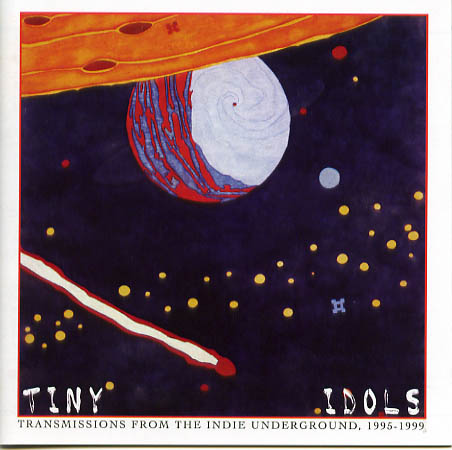
Tiny Idols, Vol. 2 is out today!

In case you didn't know, this site is an extension of a compilation series of the same name. Tiny Idols, Vol. 2, subtitled "Transmissions from the Indie Underground, 1995-1999" is a survey of the best obscure and out-of-print tracks from this fertile decade. Go on over to my website for some mp3's and info on how to buy.

Monday, August 07, 2006


Madder Rose - Madder Rose
1993

English people are always great at repackaging American music and selling it back to us. Perhaps you have heard of the Beatles? Well, in 1993, the British did it again.

Inspired by the influx of American indie-pop singles, influential British label Rough Trade decided to put out a compilation of the best emerging talent. Titled Unnecessary Niceness, the compilation begins with one of Madder Rose's finest compositions, "Madder Rose," and proceeds to offer up nine more equally great tracks by bands like the Spinanes, Helium, Lois, and all-time indie comp fave Lorelei. That many of these bands are now considered staples of the genre testifies to Rough Trade's amazing ability to spot talent. Either that or this compilation made these bands.

Madder Rose's career got started around the same time this compilation came out, and at first they seemed destined for stardom. This New York quartet had all the right influences (Velvet Underground, Jonathan Richman) and a great frontwoman in guitarist/vocalist Mary Lorson. The band's songs were simple, catchy, and a little lethargic in that late-night kinda way that Galaxie 500 tried so hard to perfect.

Lorson made it look easy. Madder Rose's chord progressions and melodies were often deceptively simple, hiding oblique, sometimes cynical lyrics that concealed more than they revealed. While Madder Rose's intellectual spin on indie pop solidified their status as the archetypical New York band of the '90s, it also may help explain the group's lack of album sales. What I don't understand is why Luna was able to mold a similar sound and have a more successful and lasting career.

Madder Rose's first two albums still stand as fine examples of smart, sleepy-eyed indie pop and have not aged a bit.

Tuesday, August 01, 2006

 
Mary's Danish: These Are All The Shapes Nevada Could Have Been (1991)

In 1985 two college friends went to see X play a show in Los Angeles. It was a night that would dramatically alter the course of their lives. Inspired by X's off-kilter harmonies, Gretchen Seager and Julie Ritter decided to form a band that would ultimately become Mary's Danish. Ten years later, the band would break up after signing to a hopelessly mismanaged indie label that burned through loads of money before burning out themselves. But in 1989, everything looked rosy for Mary's Danish. The band's first album, There Goes the Wondertruck introduced Mary's Danish's formula -- countrified vocal harmonies atop strides of funk and headlong rock. It was a quite successful sound at the time, and it yielded a huge college radio hit, Don't Crash the Car Tonight. 

Circa, Mary's Danish' follow-up, casts an even wider net than the debut, tacking on instrumental mood pieces, a Jimi Hendrix cover, heavy metal guitar moves, social protest songs, and a horn section. Although there are some questionable moments, the album remains a highly enjoyable, if admittedly patchwork affair. "These Are All the Shapes Nevada Could Have Been" finds the band adding disco to their to-do list, and it comes up sounding great, to these ears anyway.  Another standout track, "Hoof," displays Seager and Ritter's sensitive side with a ballad that fits their twangy vocals perfectly. Unfortunately for Morgan Creek, the label that put a great deal of money into releasing the album, Circa's sales did not measure up to the debut despite solid critical support. After a hastily recorded follow-up, Mary's Danish, and their label, called it quits.

Monday, July 24, 2006


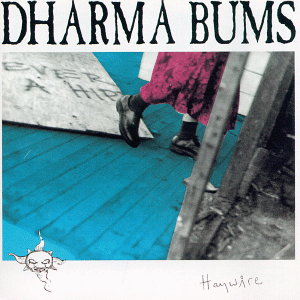
Dharma Bums - Haywire
1988

Contrary to popular belief, few '90s bands actually sounded like Pavement or Sebadoh. Sure, many recorded under the assumption that a recording budget had no correlation to -- and was perhaps even detrimental to -- good music, but the true source of all '90s bands was in fact R.E.M. This truth is obscured by the fact that R.E.M. had entered the '90s as something of an embarrassment, a reminder of alt-rockers' tree-hugging days spent thinking that maybe 10,000 Maniacs actually could solve the homeless problem with a hit song. Worse still, on their 1994 misfire Monsters, R.E.M. offered proof of their own irrelevancy by plagiarizing the genre that supplanted them, three long years after Nirvana and the Smashing Pumpkins heralded the new sound of a more angry, disillusioned generation.

But in 1988, R.E.M was still king. The Dharma Bums, although legendary in their hometown of Portland, Oregon, possessed neither the charm or media savvy that R.E.M. so effortlessly mutated into commercial stardom. That didn't stop the Bums from releasing two decent albums of what critics were then accurately calling "college rock" -- accurate, because absolutely no one else was listening to it. Still, the Dharma Bums' debut did produce one great song. The effortlessly brilliant "Haywire" stands as one of the most appealing R.E.M. ripoffs of the late '80s, an era that hardly had a shortage of them. The chiming guitar arpeggios and no-nonsense drumming is an easy enough feat to replicate, but what amazes still is the way in which Bums' singer Jeremy Wilson captures Stipe's ability to mix mumbled, vaguely poetic lyrics into a beguiling confection that pulls the listener in like a beautiful girl whispering at you across the table.

R.E.M. was influential in many ways, but Stipe's lyrical equivocacy was ultimately the band's most important innovation. The cryptic song titles and lyrics of both Pavement and Guided by Voices is undoubtably a testament to R.E.M.'s lingering fingerprints, even if neither was quick to admit it. In fact, when Pavement did finally acknowledge R.E.M.'s influence, my friends and I must have breathed a sigh of relief. "Okay," we thought, "I guess it's okay that I know every word of 'It's the End of the World as We Know It' after all." In 1988, the Dharma Bums wouldn't have been embarrased though. They'd ingested the R.E.M. formula so well that they could regurgitate it into an accidental masterpiece, a song from an era before R.E.M. could do no wrong.

Tuesday, July 18, 2006


Kurt Vile - Song for John in D
2003

If Kurt Vile is as obscure and unknown as he seems, why is it that everyone I meet has heard of him? Of course people like Ariel Pink, curator of the absurd, and his outsider art teacher R. Stevie Moore know who he is. But at a recent Lilys and Human Television show, both bands made comments about him to me backstage. "He's a great guitarist," one bandmember said. "He's spotty, but he's got some good songs too," another musician said. And a quick google search reveals that this kid, who only releases handmade CD-R's and plays rarely, actually has an fan site. (Vile's own site has been "coming soon" for months.)

Okay, what is this? Some kind of conspiracy or a vast coincidence? I'm not sure, but it's true what they say: Vile can play the guitar. Like a bedroom version of John Fahey, Vile picks out delicate tunes on an acoustic guitar and decorates the scenery with fractured electronics and his pretty, fragile voice bouncing off the walls in the distance.

Last year, Vile sent me 6 CD-R's in the mail, all with scrappy, black-and-white artwork collages adorning the covers. I found that the music within was a bit spotty but Vile's lonely voice and nuanced guitar playing intrigued me. I attempted to wade through his dense catalog several times and every time I did, I kept coming back to "Song for John in D," a beautifully played song that gets more eerie every time I hear it.

Sunday, July 09, 2006

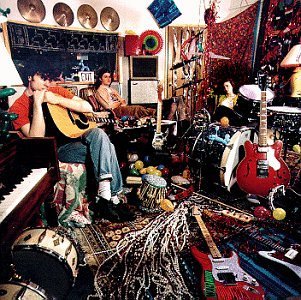
Whorl -- Maybe It's Better / Christmas -- Slumberland DRYL 11, 1992Whorl -- Maybe It's Better / Christmas -- Slumberland DRYL 11, 1992Hi everyone, it's Jay from :: clicky clicky music blog :: filling in a bit for Mr. Griffey while he is off contemplating the finer things in life like Steve Winwood. Anyway, as a rabid fan of the '90s indie rock Mr. Griffey so often concerns himself with, there are several things I feel compelled to share with you, but we'll start small.

At the heart of the knot of threads that lead back from so many great indie bands is the D.C. scene and acts such as Black Tambourine and Whorl, the latter of which we'll concern ourselves with today. Specifically I'd like to publicly declare my love for a song that close aquaintances know well is one of my favorites. "Maybe It's Better" is the A-side to the "Maybe It's Better"/"Christmas" single released on Slumberland in February 1992 as DRYL-11 (it was the single directly following the tactical nuclear strike that was DRYL-10, Velocity Girl's triumphant and unequalled "My Forgotten Favorite" [MP3 posted here with a ton of other Slumberland cuts). This was before Slumberland [new Epitonic page, Tweenet page] moved out west, when it was still based in Silver Spring, Maryland. Says so right on the label. Anyway, according to the insert that came with the single the song was recorded at Inner Ear studios in June 1991, and the lineup was Brian, Dan, Rob and Mike. You may recall that in the early '90s nobody had last names. The Mike in the lineup, if memory serves, is Michael Schulman, also a member of Black Tambourine [MySpace] and one of the principle owners of Slumberland. So there you go. Whorl, so far as we can tell, only ever issued five songs -- two singles and a compilation cut. But we haven't really exhaustively researched their output.

We were drawn to the this single at first because we had transferred to a new small liberal arts college in Connecticut and were confronted with an entire new library of music at their radio station to get through. As a big fan of the first two Lilys CDs, our first instinct was to plow through the available Slumberland and Spin-Art releases for gold. One of the biggest finds of course is "Maybe It's Better," which we've posted below. The song is the sound of a man broken by love, bobbing in the ebb of reverbed, jangly guitars and clattering drums, drowsy with drink, mumbling and slurring his heartache right into your ears:

"I know there's something wrong /
think it's kind of funny we lost our charm /
maybe I stayed too long."

And on and on. The song is brutally poignant, and if you've ever felt completely ill-equipped for success in a romantic relationship, it is also weirdly familiar. This song file is ripped from a tape recording of the vinyl single at WESU Middletown. As such there's a little extra crunching and popping, but just think of that as more evidence of Whorl's bottomless heartache.

Whorl -- "Maybe It's Better" -- DRYL-11, 1992, Slumberland Records
Sunday, July 02, 2006


Subset - Cabin Fever
2000

Just after moving to Austin in 2000, I saw a TV news story about a young kid who decided to start his own record label, which he called Post-Parlo records. "This is newsworthy because...why?" I asked myself. Nevertheless, I checked out the label's website and heard the above track by Subset and made a mental note of it. Six years later, I'm wondering what ever happened to Subset.

Turns out that little information is available on the band beyond what can be found on the Post-Parlo website, which hasn't been updated since 2004. According to the site, the band was formed by Lindsey Simon (guitar, vocals) and Nathan Fish (bass, vocals) in 1999. After releasing a 7", they added Silver Scooter drummer Tom Hudson and recorded their debut CD, Overpass. After garnering some local radio play, the band dissappeared and have not been heard from since.

I recently picked up Overpass in a CD bargain bin and got to hear it for the first time in six years. Although "Cabin Fever" stands out, the remainder of the CD is clogged with mediocre, guitar-based indie rock that splits the difference between Death Cab for Cutie and REM. Patient listening yields a few rewards, like the almost rootsy "Strained" and the outdated charm of, uh, "Outdated," but some of the emo moves become grating quickly. Anybody know anything about Subset's whereabouts?

Monday, June 26, 2006


Starlight Conspiracy - Silver Holler
1996

Starlight Conspiracy were a part of the Burlington, Vermont music scene in the '90s. With the exception of Guppyboy's homespun folk, most Vermont bands preferred the muddier turf of grunge and punk. Looking back, it would seem Starlight Conspiracy were smack in the middle of these two extremes. Instrumentally, Starlight Conspiracy honed their guitars into a fuzzy assault, while vocalist Jen Tofferi floated above the din like an enchanted pixie. This concept has become standard now (see Evanescense), but back then it was original enough to confuse critics into misfiling the band under shoegaze.

Starlight Conspiracy formed in 1994 when guitarist Denny Donovan met drummer Brad Searles while working at an indie record store. After recruiting bassist Shawn Flanigan, the trio auditioned a parade of vocalists, only to eventually opt for Tofferi, a friend of Searles. Searles, who writes the enjoyably informative blog, Bradley's Almanac, still thinks highly of Tofferi, even though the band broke up in 1998 after recording only one album. "I'd loved her voice since the time I'd played with her in my first band, Hover. I wish she was still singing with someone, I'd blog the hell outta that band."

Still, Searles depature from Vermont eventually led to the band's breakup. "We
tried to make it work," Searles said, "even with the multi-hour commute I'd make once a month, but that just wasn't enough practices to keep it going, or to keep everyone interested. Eventually Shawn moved out west, Jan headed to southern Vermont, and Denny came down to Boston, where we eventually started up the Also-Rans together."

Searles is the gatekeeper for the Starlight Conspiracy estate, and you can check out his lovingly curated site here for more mp3's, photos, and more.